Talus MotorSports
1 / 8
BACKGROUND
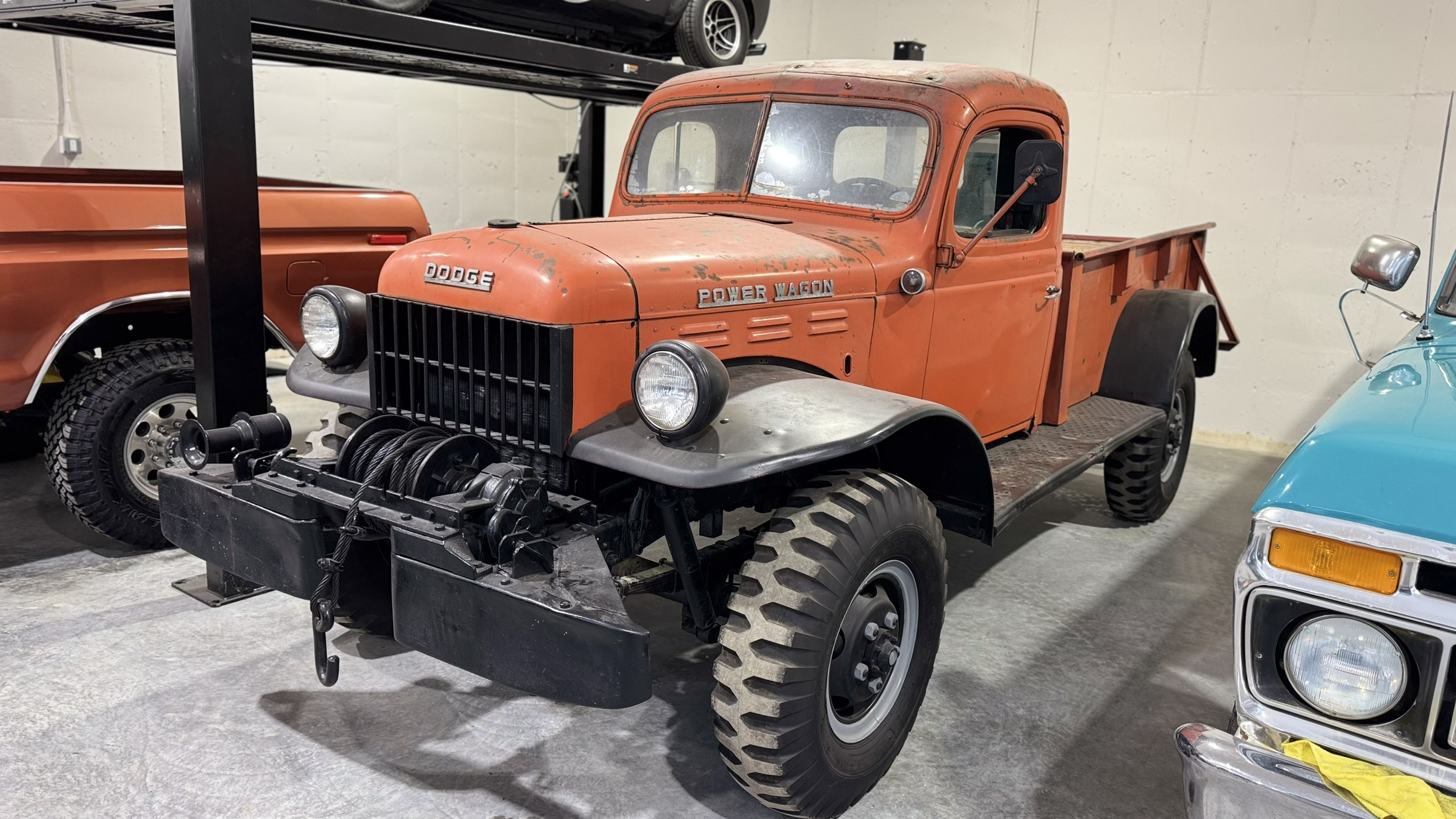
Introduced in the late 1940s, the Dodge Power Wagon was one of the first four-wheel-drive trucks offered to the public that was directly derived from military hardware. Built for work rather than comfort, early Power Wagons were designed to operate in remote environments where durability and self-sufficiency mattered more than speed or refinement.
This 1949 example is said to have spent time working on a ranch near Steamboat Springs, Colorado, a setting well aligned with the truck’s original purpose. Rather than being restored to a showroom standard, it remains a running and driving project that reflects decades of use, repair, and incremental change. Its current condition highlights the Power Wagon’s role as a working vehicle first and a collectible second.

MODIFICATIONS
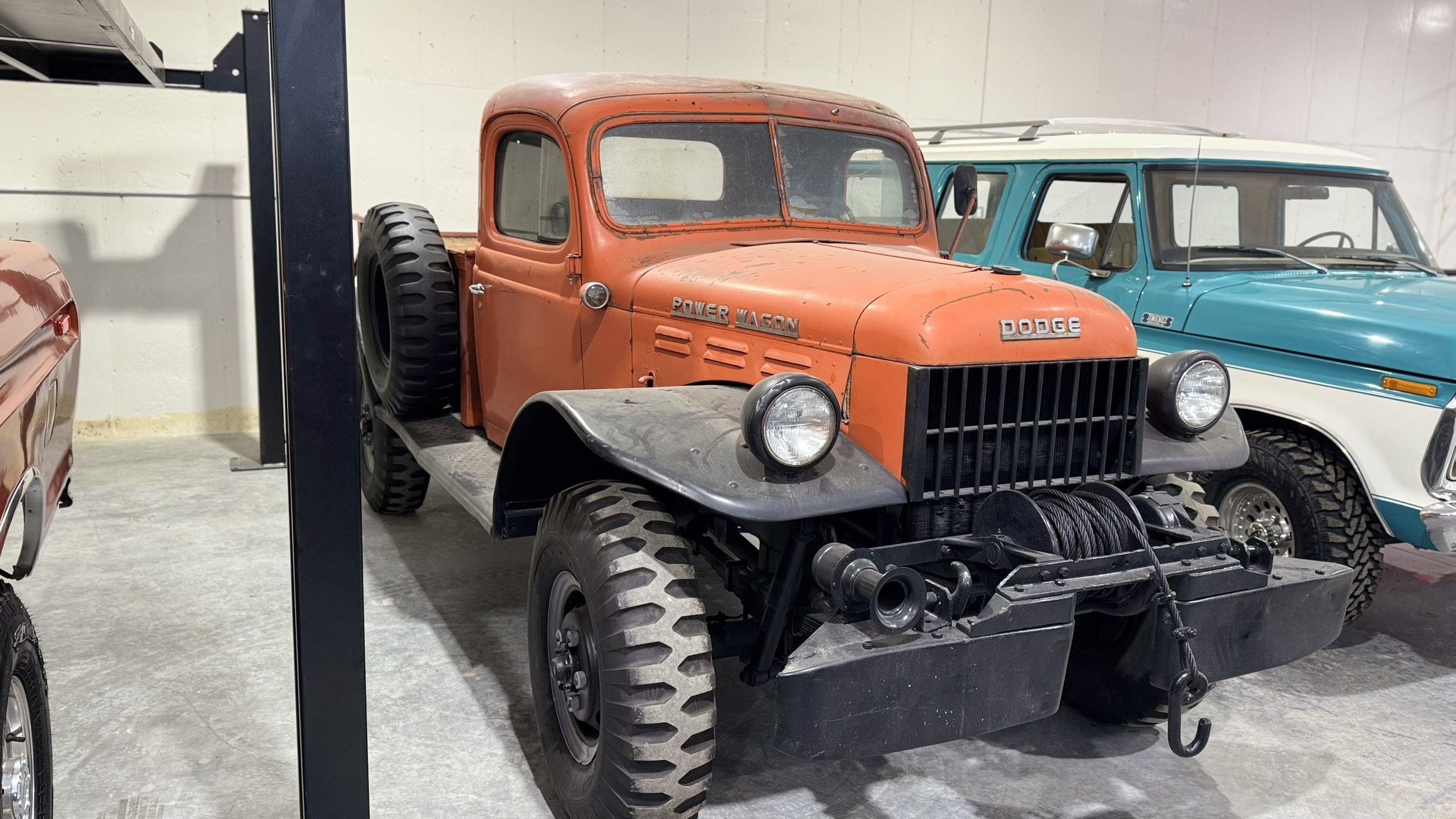
The truck retains its original flathead inline-six architecture, paired with a four-speed manual transmission and a dual-range transfer case. A conversion to a 12-volt electrical system improves basic usability, while period-correct utility features such as the PTO-driven front winch, tow ball, and wood bed components reinforce its work-focused identity.
Interior updates are minimal and functional, including a replacement bench seat and heater, while exterior changes appear aimed at preservation rather than modernization. The modifications present are largely practical in nature, intended to keep the truck operational while maintaining its original mechanical layout and purpose-driven simplicity.
DRIVING
Driving a Power Wagon is a slow, deliberate experience that reflects its origins in industrial and agricultural work. Inputs are heavy, feedback is constant, and progress is measured rather than effortless. The truck encourages patience and mechanical sympathy, rewarding smooth operation over hurried movement.
Rather than isolating the driver, the Power Wagon makes its mass, gearing, and drivetrain behavior unmistakably clear. It’s engaging in a fundamental way—not because it’s fast or comfortable, but because it turns routine motion into a conscious, tactile process. The experience is less about covering distance and more about understanding the machine and the terrain beneath it.